
Should we be positioned for Feudalism?? Not as a joke, but as the only mental model that explains why the macro world acts the way it does right now. Should we stop waiting for “real economy” businesses to work?? Should we stop complaining when value names make new multi-year lows?? What if this isn’t a soft-patch, and instead, it is the new equilibrium??
Let me back up a bit.
I’m a big believer in using mental models to set macro tone for portfolio positioning. When I conjured up “Project Zimbabwe,” everyone knew what I envisioned; fiscal recklessness, massive monetary easing, and governmental idiocy. The only question was how adventuresome to get when levering up the long portfolio. In retrospect, even I wasn’t ambitious enough in terms of playing it. Unfortunately, that mental model seemed to fade away in waves, starting in 2022 with Ponzis, commodities a year later, and then “Real Economy” businesses last year.
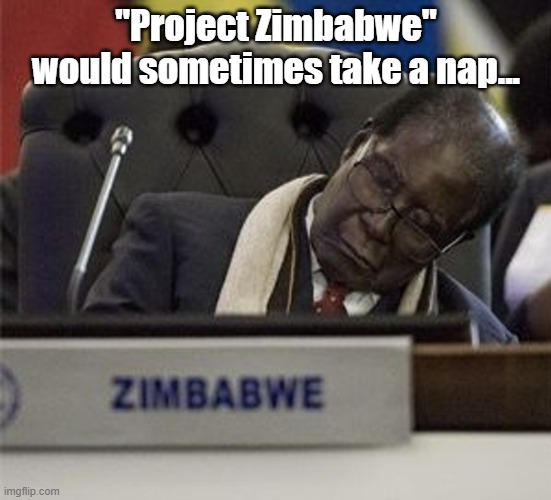
It’s genuinely hard to say that we’re in a “Project Zimbabwe” world today. On the monetary side, with the Overnight Reverse Repo Facility drained, they’re finally doing Quantitative Tightening. On the fiscal side, where everything is driven by rates of change, the deficit as a percentage of GDP is actually shrinking. If you pro-forma out a continuation of tariffs, along with a lower Fed Funds Rate, you could see the deficit shrink another two or even three percent of GDP from here. If I didn’t know better, I’d call this austerity, which is a strange place for a democracy to end up. Usually, the only time that democracies do austerity is when the IMF forces them into it. Yet, here we are.
Earlier this year, I predicted that they’d have no choice but to “Run It Hot” as that’s the mental model that garners the most votes; and in a democracy, the politicians are all highly attuned to what’s popular. Now, almost a year later, I’m baffled. Why has no politician tried to run it hot?? Europe and Japan have made some token gestures, but nothing meaningful. China continues to press ahead with the run-away assembly line, subsidized by the conscripted savings of its peasants. None of this will move the needle, and with the four largest economic blocs in stall mode, the rest of the world has struggled. Real wage growth is what almost every citizen demands, yet politicians continue to forcefully stand in the way of this.

I’ve thought deeply about this conundrum. At first, I thought it was because global leaders simply didn’t know how to achieve economic growth, but increasingly, I think they’re actually anti-growth from a policy standpoint. They’re genuinely scared that growth will dent highly-elevated asset prices. What if, conceptually, zero economic growth is their economic policy decision??
Creating inflation, having a weak or strong currency, and intervening to adjust the yield curve are all thought of as policy decisions. Why isn’t economic growth also thought of as policy decision?? We all pretend that growth rates are haphazard, and out of a policymaker’s control, but that’s not how economies are structured. If you want economic growth, then there will be growth. If you’re against growth, then there won’t be any growth.
Of course any policy decision will have side effects. There is no free lunch when you look at economic policy. Elevated growth in a Developed Economy often leads to;
-higher interest rates, leading to lower equity and real estate multiples
-higher wages leading to squeezed margins at corporates, hitting multiples
-higher inflation leading to lower multiples
-more competition, which can uproot existing monopolists
I can go on, but you get the idea. Any policy that targets growth, would likely harm asset markets, much as we experienced in 2022 when the “Real Economy” finally woke from a fifteen-year slumber and crashed over-inflated asset values. When you understand the existential fear that this engendered amongst those who have assets, you start to understand why economic growth remains so lackluster.
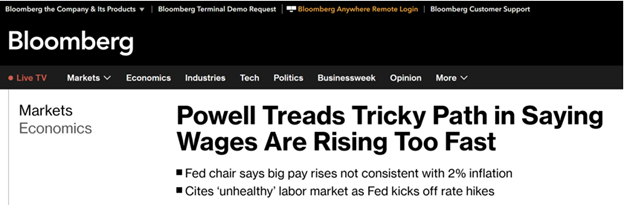
What if zero growth is a carefully crafted policy decision, so as not to deflate the global asset bubbles?? Suddenly, when you see it through that lens, a lot about our global financial system starts to make a lot more sense. I really thought that Trump would try and “Run It Hot” forcing everyone else globally to do the same, or risk missing out. Instead, he’s done the opposite, and we’re running it ice cold here in America. If you deflate the nominal GDP by the inflation that we’re all experiencing in our lives, you’d be correct to believe that real GDP growth has been deeply negative for a few years now. Even worse, when you examine the causes, you’ll come to realize that this lack of growth, negative growth really, could be intentional.
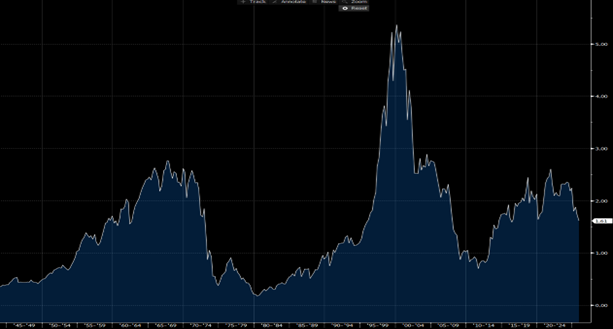
What if I’ve had the wrong mental model all along?? What if no one in power actually cares what the vast majority of voters think anymore?? What if we need to go back into history in search of a better mental model for the current economy?? Let’s call it Feudalism.
What were the constants in Feudalism?? Economic stagnation, a handful of lords, a few more knights, and millions of serfs. Wealth was tied to incredibly overvalued hard assets with minimal yields, as much of the cash flow went to further fortifying these assets. Labor was not highly valued, capital was. No serf could ever dream of earning enough to buy their way into proper nobility, especially as the government taxed all economic activity, with additional taxes on the poor through a multitude of small usage fees that went to the central government, and the various quasi-national/corporate entities of the day, before frequently round-tripping to the lords that served useful purposes. Finally, serfs were expected to serve the lords, show up in times of need, and protect their assets. It was a system designed to extract wealth and store it safely—it wasn’t a system that cared about creating more consumers.
What do we have today?? Tech bros/PE/VC/associated grifters at the top, a few times as many knights in the managerial class, and then a mass of serfs with very little say about their lives. Once again, we have a bubble in assets, with very low cash yields. Meanwhile AI is meant to further impoverish the serf class, by devaluing their labor, with plenty of migrants to take the jobs that AI cannot do. Labor is not highly valued, capital is. Today, serfs fund the large corporations through taxes on wages that flow through the government to favored recipients, along with mandatory usage fees to quasi-national/corporate entities (property tax/sales tax/mandatory insurances/near-mandatory smartphone and utility usage/etc.). Finally, serfs are expected to save from their paychecks and serve the lords by buying index funds, further elevating asset values and cementing the control of the lords. Our system is designed to extract wealth and increasingly ensure that it’s unassailable – it isn’t a system that wants consumers to consume more.

I get that this is a very abstract set of similarities, with plenty of dissimilarities, but what model ties in better with the current state of play?? We’re protecting asset values, at the cost of everything else. For lack of a better mental model, it sure appears like we’re doing Feudalism, and most of the modern world has seemingly embraced it. Negative real growth, destruction of the Middle Class, and governments blatantly ignoring the plight of voters, since they increasingly recognize that serfs don’t get to have an opinion in a Uniparty system.
You can agree or disagree with me. Honestly, I don’t care. I’m investing for Feudalism. No other mental model answers the question of why so many “Real Economy” sectors are doing terribly today, with only tech (our new Feudal lords), along with a handful of “Wealth Effect” stocks tied to the 1%, and boomers still putting up numbers. Naturally, the debasement trade continues to gain momentum, as they need accelerating levels of monetary debasement to sustain the financial system, and that drives certain equities tied to the stock market as well. What else is working?? Who else is putting up accelerating numbers?? Some companies tied to government largess?? Not much else. I wonder if this isn’t an accident. What if it’s a policy decision??
I also know that Feudalism isn’t a permanent state of affairs. In a democracy, the voters will eventually vote for economic growth. In Europe, they’re trying to break free from Feudalism, but those who want growth have been branded “far-right” for some odd reason. In the US, we’ve tried Trump twice, and he’s failed us twice. He simply cannot effect pro-growth policies for fear of detonating the global asset bubble.
Eventually, we’re going to “Run it Hot” as there is no other choice. However, I’m increasingly convinced that we need a changing of the guard at the top before that happens. We need pro-growth leaders first, leaders who are willing to let the asset bubbles deflate in pursuit of real economic growth. Unfortunately, that may be a long time in coming. Biden, from the left, tried economic growth in 2022, and those backing him recoiled in panic. In a Uniparty system, what is the impetus for growth, when Feudalism is working so well for those at the top?? The governing elites know how to create growth, but after 2022, they’re also terrified of growth. They’re now actively standing in the way of growth. They want stasis. They want Feudalism.
My sorts of “real economy” companies haven’t been working for fifteen years now, excluding a few quarters where COVID stimmies woke them up. I finally understand why they aren’t working – the government doesn’t want them to work. I also understand what is needed for them to start working – we need new economic leadership that wants growth – only then will we get growth.
When there’s change in the top, we can go back to investing for growth. Until then, let’s figure out how to make money in feudalism…

The Problem With Ponzis…