
Every time tech has one of its periodic moonshots, the same email shows up in my inbox from one of my investors. Some version of: “Kuppy, why don’t we own any of this stuff?” I’ve been mulling this over for almost three decades now, and somehow have never gotten around to writing it down. Tech just went on another legendary run, so I feel like now is the time to detail my thinking on why I’ve avoided tech over the years.
To start with, tech is a monolithic term that is used to describe all sorts of businesses that want higher multiples—yet may not have much to do with technology. WeWork was seen as a tech disruptor, while in reality, it was a prosaic leasing company that happened to utilize technology to track its tenants. I assume most multi-tenant firms also use some sort of tech to track tenants. This is neither special nor unique—though WeWork did have free kombucha. For the sake of this piece, I’m going to allow any business that wants to self-identify as ‘tech’ to exist as a ‘tech’ company.
Now that we have a definitional qualifier out of the way, why don’t I invest in tech?? Put simply, they tend to be absolutely terrible businesses. While everyone looks at the success of Microsoft (MSFT – USA) or Apple (AAPL -USA), they forget about all the businesses that guessed wrong on an evolutionary fork, and became roadkill. They forget about all the tech businesses that toil away in obscurity, barely keeping their heads above water, while endlessly diluting investors. They forget about all the supposed winners, that have barely even won anything.
Let’s briefly look at Uber (UBER – USA) a business that’s clearly at scale and dominant in an oligopolistic market. In 2025, they had $5.6 billion of operating income on an invested capital base of $29.5 billion ($40.8 billion of net tangible assets – $11.3 billion of tangible current liabilities), leading to a pre-tax return of 19% on capital deployed. That’s a decent rate of return on capital, though clearly nothing special for such a dominant business. Meanwhile, the accumulated deficit peaked at $32.8 billion in December of 2022 and was still over $10 billion as of the end of 2025. Imagine having to suffer losses of that magnitude, before finally earning 19% on capital deployed, after endless dilution along the way. Uber is seen as a winner, yet investors are still in the red. That’s before we even talk about the elephant in the room—autonomous vehicles. What will that ecosystem look like?? Who will own and manage these fleets of vehicles?? What app will we all use to order them with?? Can Uber even get into the black before new challenges face it?? What’s the point of winning, if this is what winning looks like??

This brings up the biggest problem with tech, obsolescence and the need for endless reinvestment. Frequently in tech, you must make huge investments up front to invent a product, roll it out, market it, engage customers, and then just when you’re starting to get somewhere, a better way to solve the problem arrives and disrupts you. You can either push forward with your old tech and try to monetize what you have before the new player takes all your market share, or pivot resources to combat the new tech, which yet-again forestalls capital returns. Even then, sometimes, the challenge is insurmountable. Uber is effectively at this crossroads already. What multiple would you put on such a business??
Then, even when you are actually winning, the returns to most investors are meagre. To retain quality people in a highly competitive sector, you have to give away huge employee compensation, mostly made up of various forms of equity. Sure, if you are getting big growth, a few percent annual dilution is acceptable, but usually I see a business with 20% revenue growth and 5% dilution and think to myself that I’m only getting 15% net growth, while paying a crazy multiple for this anemic growth. Then again, many tech businesses tend to be surprisingly capital consumptive, even though they’re oddly asset light. They’re always reinvesting in research or sales to fund future growth, and stock options serve as a disguised At-The-Market offering of shares, deferred a few years, which helps fund this expenditure.
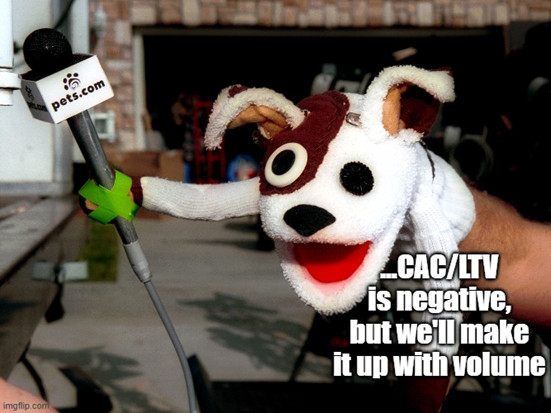
Given all of the above, I’m always baffled by the valuations. Sure, sometimes this is more than justified if a company can grow rapidly and become a category-killer in a winner-take-all vertical. More often, these businesses are extremely expensive for what have historically been really terrible business. Naturally, there are some ‘cheap’ tech names, but they tend to mostly be value traps. The most dangerous stock in the world is a tech stock that looks optically cheap—it’s only cheap because those who are closest to the tech are aware that it’s already obsolete. Look at payments today. Most of them optically screen cheaply, but does anyone know what payments look like in a decade?? I assume most of the leaders today are obsoleted by entirely new payment rails that haven’t even been invented yet. What’s the right multiple to put on something that may not exist in a decade?? Meanwhile, these companies plow away buying back the shares of dying businesses, mostly to offset share-based compensation, instead of returning it to you in dividends.
This is my final problem with tech. You don’t get capital returns. I’m all for businesses retaining capital if they have a great use for it, but at some point, as an investor, I want to get paid. I prefer buybacks in a growing business, but at most good tech companies, the shares are so overvalued, that the buybacks are likely dilutive to shareholders. I guess that dividends are an acceptable option then, but no one really wants a 1% yield, while getting diluted by options at a few percent a year. Then again, tech companies that have focused on returning capital have often produced awful track records. You end up with a bunch of names like IBM (IBM – USA), Intel (INTC – USA), Hewlett Packard (HPQ – USA) that fell behind, missed product cycles, and at some point over the past two decades, became lost puppies. That’s not a very attractive outcome either. In tech, you either spend endlessly, or you lose your lead and your reason to exist. It’s just an awful combination.

In summary, I feel like investors in the tech sphere fixate on the handful of historic winners, which admittedly keep winning, and then seek out smaller businesses that will hopefully also become great winners—unfortunately most wont and the step-down in valuation when one stumbles is quite severe. In the end, investing is about finding things with low risk and high upside, and I never seem to find that in tech. From a risk standpoint, the valuations and endless obsolescence make the risks unacceptable, and then from an upside standpoint, much of it seems priced in.
With all of this in mind, I’m going to stick to my simple, easy to understand businesses that are undergoing inflections and hopefully producing copious amounts of cashflow at single-digit 2-year out multiples. Fortunes will be made and lost in tech, but I’m content to avoid the whole game. Call me a boomer if you want. There are easier ways to make money…
